Mount Kilimanjaro climbing
Mount Kilimanjaro Weather
Kilimanjaro Weather Guide
Understanding Kilimanjaro weather is essential before planning your climb. Because the mountain rises from tropical farmland to an arctic summit, climbers can experience multiple seasons in just a few days.
At Tanzania Kili Climb Experts, we prepare our climbers for these dramatic changes so they can climb safely and comfortably.
Unlike many destinations, Kilimanjaro’s weather is influenced more by altitude than seasons. While temperatures near the base can feel warm and humid, the summit can reach extreme freezing conditions.
Typical Temperature Range on Kilimanjaro
| Location on the Mountain | Average Temperature |
|---|---|
| Base (800–1,800 m) | 20°C – 30°C |
| Mid-Mountain Camps | 5°C – 15°C |
| High Camps | -5°C – 5°C |
| Uhuru Peak Summit | -20°C to -7°C |
Climbers should prepare for hot sun during the day and freezing temperatures at night.
What Is Kilimanjaro Weather Like?
Mount Kilimanjaro sits close to the equator, but its extreme height allows it to create its own weather systems.
The mountain interacts with trade winds coming from the Indian Ocean, which bring moisture and precipitation as they rise along the slopes.
Key Weather Influences on Kilimanjaro
| Weather Factor | Effect on the Mountain |
|---|---|
| Altitude | Temperatures drop as you climb higher |
| Trade winds | Bring moisture that creates rain and snow |
| Equatorial location | Strong sun and UV radiation |
| Terrain | Different slopes receive different rainfall levels |
Because of these factors, climbers may experience sunshine, clouds, rain, and snow during the same expedition.
Best Time to Climb Kilimanjaro
Although Kilimanjaro can technically be climbed year-round, some months provide much better climbing conditions.
At Tanzania Kili Climb Experts, we recommend climbing during the two main dry seasons.
Best Climbing Seasons
| Season | Months | Conditions |
|---|---|---|
| Short Dry Season | January – March | Cooler temperatures, fewer climbers |
| Long Dry Season | June – October | Clear skies and most stable weather |
Rainy Seasons to Avoid
| Season | Months | Conditions |
|---|---|---|
| Long Rain Season | April – May | Heavy rainfall and muddy trails |
| Short Rain Season | November | Light but frequent showers |
The June to October period is the most popular because the weather is usually stable and dry.
Summit Weather Conditions
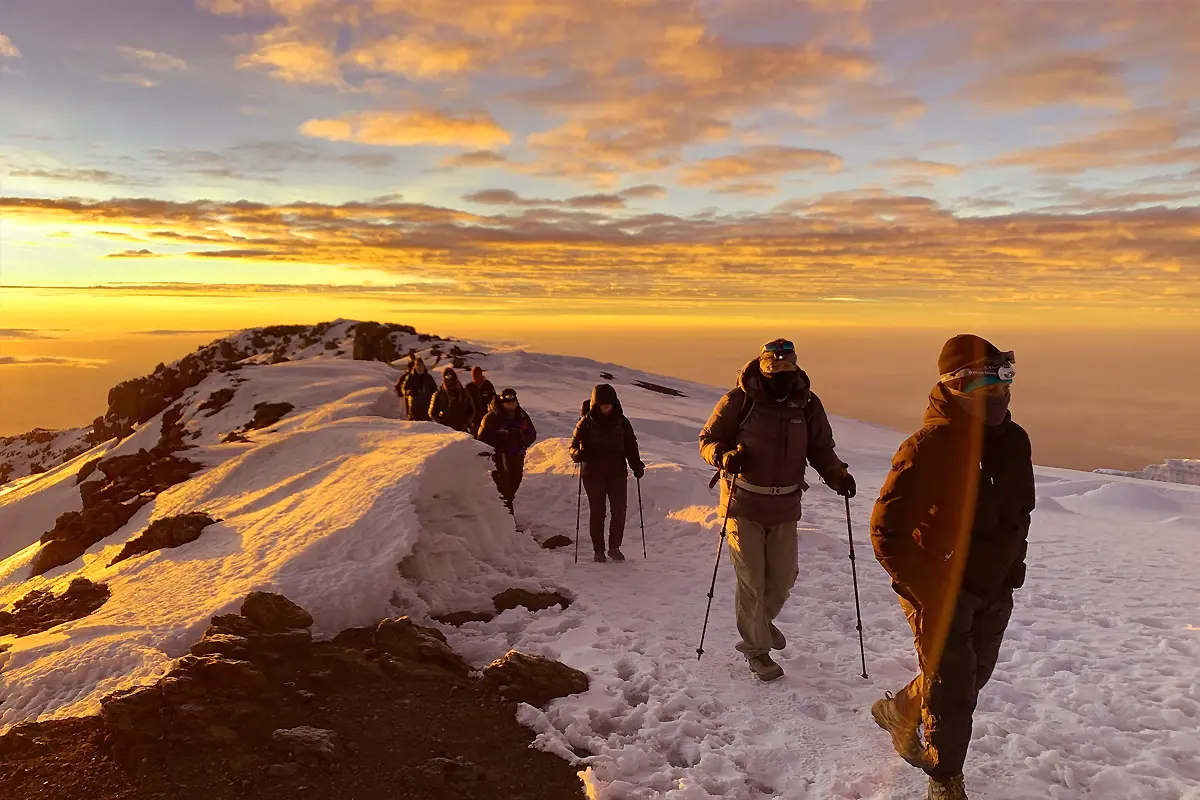
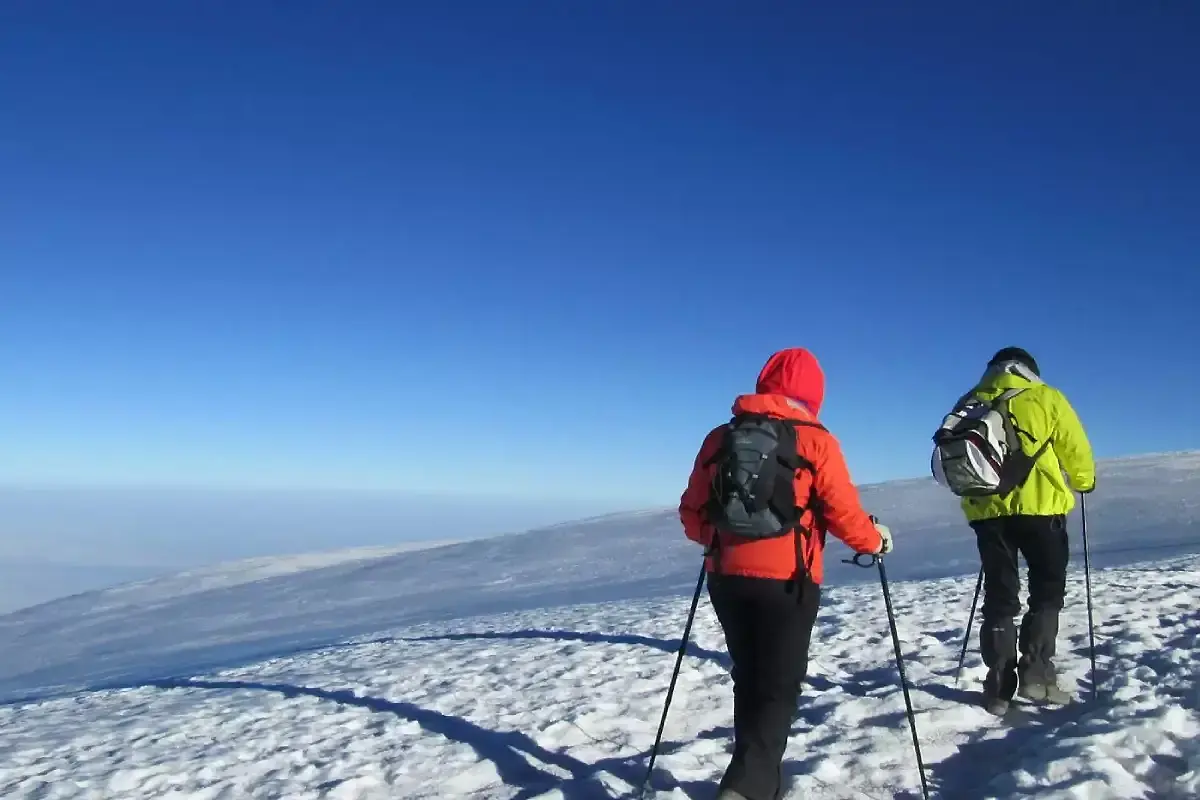
Summit night is the most demanding part of the Kilimanjaro climb. Most climbers start their final ascent around midnight to reach Uhuru Peak at sunrise.
During this time, temperatures can drop dramatically.
Summit Climate Overview
| Condition | Typical Situation |
|---|---|
| Temperature | -7°C to -29°C |
| Wind | Strong and cold |
| Oxygen levels | About 50% of sea level |
| Terrain | Snow, ice, and volcanic rock |
Proper gear, including thermal layers, gloves, and insulated boots, is essential for summit success.
Is There Snow on Mount Kilimanjaro?
Yes. Despite its location near the equator, Kilimanjaro is famous for its snow-covered summit.
Snowfall occurs mainly during the rainy seasons when moisture rises up the mountain and freezes at higher elevations.
Snow Patterns on Kilimanjaro
| Season | Snow Conditions |
|---|---|
| January – March | High chance of summit snow |
| June – October | Snow possible but less frequent |
| April – May | Heavy precipitation (snow at high altitudes) |
Although glaciers on Kilimanjaro have reduced over time, snow can still be seen near the summit throughout the year.
Kilimanjaro Climate Zones
One of the most fascinating aspects of climbing Kilimanjaro is traveling through five distinct ecological zones.
Each zone has different temperatures, vegetation, and weather conditions.
Kilimanjaro Ecological Zones
| Zone | Altitude | Description |
|---|---|---|
| Cultivation Zone | 800 – 1,800 m | Farmland and villages around the mountain |
| Rainforest Zone | 1,800 – 2,800 m | Dense forest with high humidity and rainfall |
| Heath & Moorland | 2,800 – 4,000 m | Open landscapes with giant heather plants |
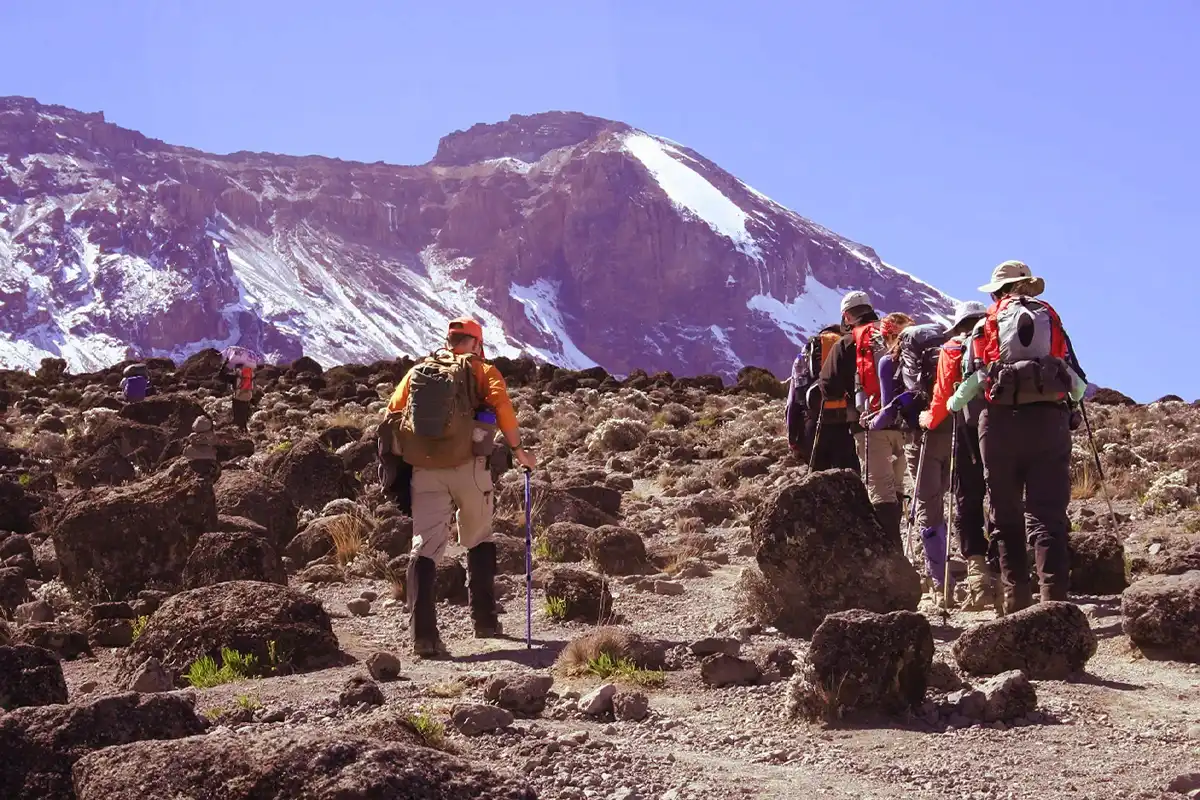
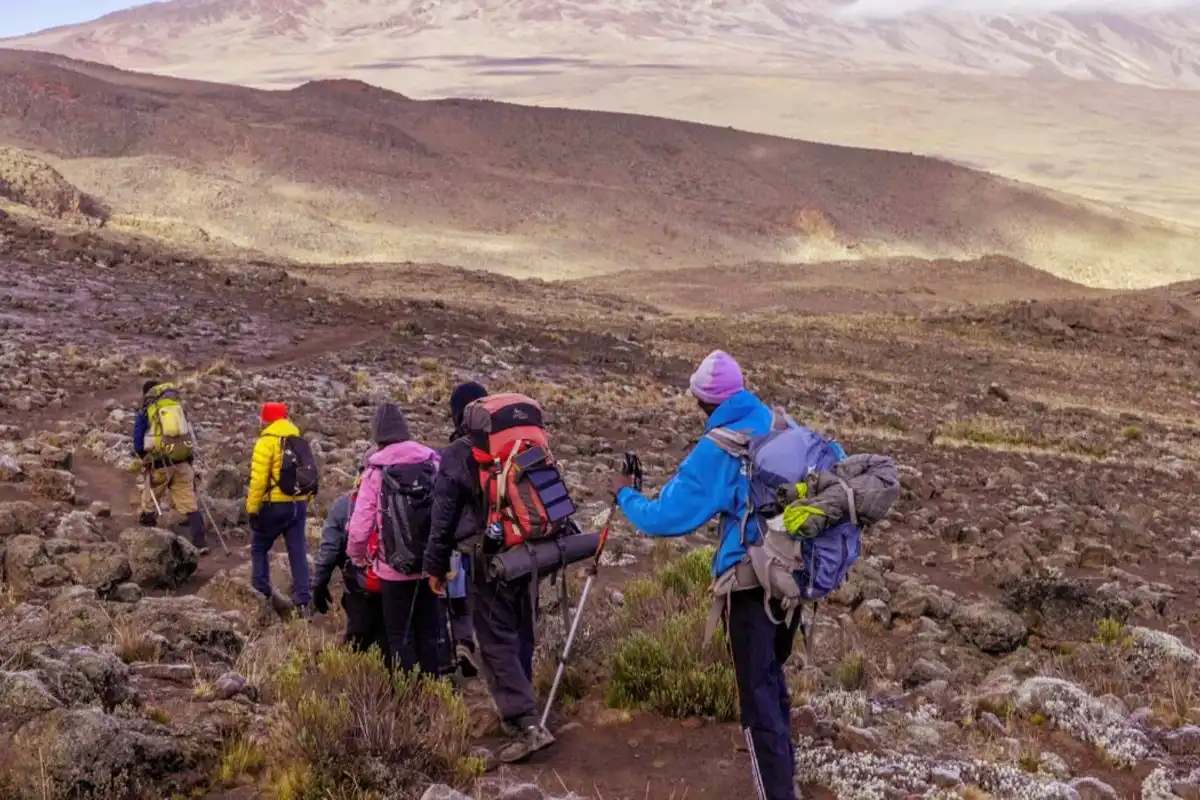
| Alpine Desert | 4,000 – 5,000 m | Dry, rocky terrain with extreme temperature swings |
| Arctic Summit Zone | 5,000 m+ | Snow, ice, and freezing winds |
Climbers essentially travel from tropical Africa to an arctic environment within a week.
Kilimanjaro Weather Variations Throughout the Year
Weather conditions can vary significantly depending on when you choose to climb.
Seasonal Weather Comparison
| Month | Weather Conditions |
|---|---|
| January – March | Cooler, clearer skies |
| April – May | Heavy rains |
| June – October | Dry and stable |
| November | Short rainy season |
| December | Cooler with possible snowfall |
Even during dry months, climbers should always prepare for unexpected weather changes.
Weather Tips for Kilimanjaro Climbers
Climbing Kilimanjaro requires preparation for a wide range of weather conditions.
Essential Weather Preparation Tips
| Tip | Why It Matters |
|---|---|
| Layer your clothing | Temperatures change quickly |
| Bring waterproof gear | Rain is common at lower elevations |
| Protect from sun | UV exposure is strong at high altitude |
| Stay hydrated | Dry air increases dehydration risk |
At Tanzania Kili Climb Experts, we carefully monitor weather conditions and help climbers pack the correct gear for every stage of the mountain.
Kilimanjaro Weather FAQs
What Is the Temperature at the Summit of Kilimanjaro?
Temperatures at Uhuru Peak typically range between -7°C and -29°C, especially during the night summit attempt.
When Is the Best Weather for Climbing Kilimanjaro?
The best weather usually occurs between June–October and January–March.
Does It Rain on Kilimanjaro?
Yes. Rain is common in the rainforest zone and during the rainy seasons of April–May and November.
Does Kilimanjaro Have Snow?
Yes. Snow often covers the summit and can occur at high altitudes during most months of the year.
Climb Kilimanjaro with Tanzania Kili Climb Experts
Weather conditions on Kilimanjaro can be unpredictable, but with the right planning and experienced guides, reaching the summit becomes an unforgettable adventure.
Tanzania Kili Climb Experts provides:
-
Experienced local mountain guides
-
Carefully planned acclimatization itineraries
-
Weather-appropriate equipment recommendations
-
High summit success rates
Our team ensures you are fully prepared to climb Africa’s highest mountain safely and confidently.

Talk to Our
Climbing Expert
What To Plan A Kilimanjaro Adventure?
Contact Us. We are always here to help you
Climb Kilimanjaro on expertly guided routes. 97.6% summit success rate
- 5 Days
5 Days Marangu Route
From
$1,500
- 7 Days
7 Days Machame Route
From
$1,850
- 8 Days
8 Days Lemosho Route
From
$2,050
- 9 Days
9 Days Northern Circuit Route
From
$2,350
- 12 Days
8 Days Lemosho Route
From
$2,450